


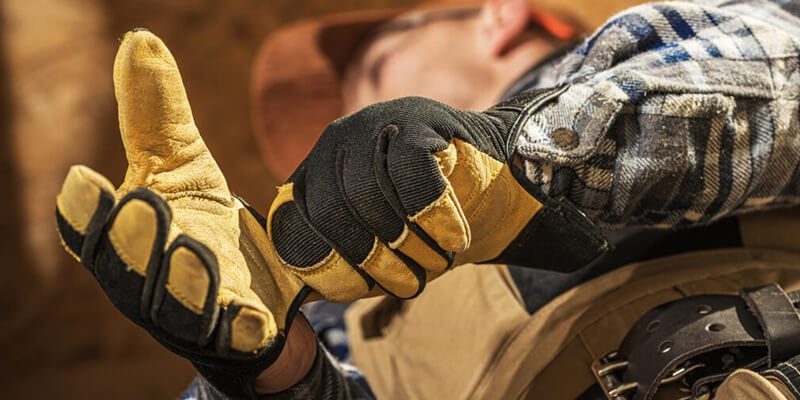
The Essential Hand Safety Guide
The increasing industrialization in the world has brought about many benefits for people from all walks of life. Specifically, the worker’s rights movement has made sure that they are well paid and well protected for their labor. For the latter, various safeguarding measures have been put into place to prevent any injury to the workers. In that regard, no area requires more protection than the hands.
Whether working in construction, manufacturing, assembly lines, or food processing, hand safety is of the utmost due to constant exposure to risks. These include mechanical injuries, chemical burns, cut, skin, and nerve damage.
That’s why, without the proper protective measures, the employees are open to all sorts of possible attacks. Hence, choosing the right equipment for hand safety becomes more than just compliance to regulation. Rather, it focuses on making sure that productivity, comfort, and longevity of a worker’s career.
The Necessity Of Hand Safety
Before we determine which method of protection works best, let’s dive into what makes it incredibly important to protect them. In essence, they require constant attention because they are often amongst the most injured parts of the body.
According to occupational safety statistics, they account for about 40% of all injuries occurring in a workplace. The consequence of such incidents impacts both the employer and the employee. These include lost workdays, medical expenses, and in severe cases, permanent disability.
On the other side, studies have been conducted that show that many of these incidents are easily preventable. By not only providing the worker with hand safety but the right kind of protection. As different types are designed for different jobs. Thus, it is important to select the right option given the circumstance for complete safeguarding.
Understanding the Types of Hand Safety Gloves
Now, in order to understand which pair best works in which situation, one needs to be aware of the composition of their build. Each pair is designed with a certain hazard in mind.
Wearing the wrong glove may prove to be the same as not wearing any protective gear at all. Let’s look into the various types of hand safety available in the market.
Disposable Gloves
Composed of nitrile, latex, or vinyl, this pair works best against contamination and light chemical exposure as a short term protection. Commonly found in laboratories, healthcare settings, and food handling environments, they offer compact security against hazards of their workplace.
Best for: Biological protection, hygiene sensitive tasks, chemical splash resistance with limited use
Avoid for: Mechanical, thermal, or high abrasion tasks
Chemical Resistant Gloves
They are made using neoprene, nitrile, PVC, or butyl rubber. Additionally, they work well against acids, solvents, and other hazardous liquids. However, it is important to mention that the glove material must align with the chemical hazard it is supposed to protect against. That’s because a single glove can’t protect against all chemicals.
Best for: Handling chemicals, cleaning agents, and corrosive substances.
Avoid for: Sharp objects, mechanical stress
Cut Resistant Gloves
Gloves like Kevlar, Dyneema, or stainless steel mesh are made to resist cuts. They are irreplaceable in industries where the worker is constantly exposed to sharp edges or the material itself poses a risk.
Best for: Metal fabrication, glass handling, food processing
Avoid for: Chemical exposure or extreme temperatures
Heat Resistant and Cold Resistant Gloves
As given in their names, these gloves provide thermal protection. They come in handy where the hands are exposed to extreme temperatures.
Heat resistant gloves: Used in welding, foundries, and baking.
Cold resistant gloves: Used in refrigeration, outdoor work, and cold storage.
Electrical Resistant Gloves
Again, their name explains their purpose as they safeguard against electrical shocks. Moreover, they are made from rubber and tested to specific voltage ratings.
Best for: Electricians, power line technicians, and maintenance crews.
Avoid for: Chemical or cut risks.
Leather Gloves
A durable, abrasion resistant and comfortable pair, it is often used for general purpose tasks. Additionally, it can be lined with other protective layers as well.
Best for: Construction, rigging, mechanical work.
Avoid for: Chemical exposure or tasks requiring fine dexterity.
How Do We Choose the Right Glove For Hand Safety?
Now that we are aware of the different kinds of safeguarding and the environment they work best in, let’s look at the process of choosing the right one. By combining the hazard assessment, material selection, and user feedback, we can make an informed decision.
Step 1: Conduct a Hazard Assessment
Firstly, it is important to know what we are dealing with. Hence, evaluating the work area and identifying all possible threats goes a long way. The ideal process includes documentation of each hazard present in the area.
Step 2: Match the Glove Type to the Hazard
As mentioned earlier, there exist specific gloves to deal with specific dangers. Match the right hand safety for each hazard to prevent even the slightest risk of injury.
For example:
Chemical lab work – Nitrile or butyl gloves
Metal fabrication – Cut resistant Kevlar gloves
Welding – Heat resistant leather gloves
Step 3: Test and Evaluate Gloves in Real Conditions
Before finalizing any large scale order, it is best to test different models of each type of hand safety gloves first in the workplace environment. Should a glove feel cramped, or it limits dexterity, then it may not be the perfect fit. Hence, it may secure compliance but the productivity is likely to fall.
Step 4: Verify Certification and Quality
Finally, it is important to check the product’s labels (EN or ANSI marks). These indicate whether or not they meet the necessary protection standards. It is advised to purchase in bulk from reputable sources that offer transparent testing data.
Step 5: Train and Monitor Usage
It is not recommended to give workers the glove from the start and expect them to learn on the job. Instead, having sessions to educate workers on glove care, limitations, and replacement schedules works best in the long run. Moreover, it advised that supervisors in each workplace regularly monitor and evaluate their hand safety performance regularly.
Educate employees about glove care, limitations, and replacement schedules. Supervisors should monitor compliance and evaluate performance regularly.
Step 6: Review and Update
As a company evolves, so do the threats its workers face. Hence, revisiting hand safety periodically works in the best interest of both worker and owner. Looking at changing processes, materials, or hazards keeps them in control of everything. The ideal process is one with continuous improvement to hand safety effectiveness.
Conclusion
All in all, the importance of hand safety can not be expressed enough. It is the responsibility of the owners to not only provide perfect hand safety equipment but also constantly improving it to prevent any risks. Any injury incurred in a workplace negatively impacts all parties involved. Hence, it is better to ensure that hand safety is always secure, and geared towards providing optimal productivity.
