


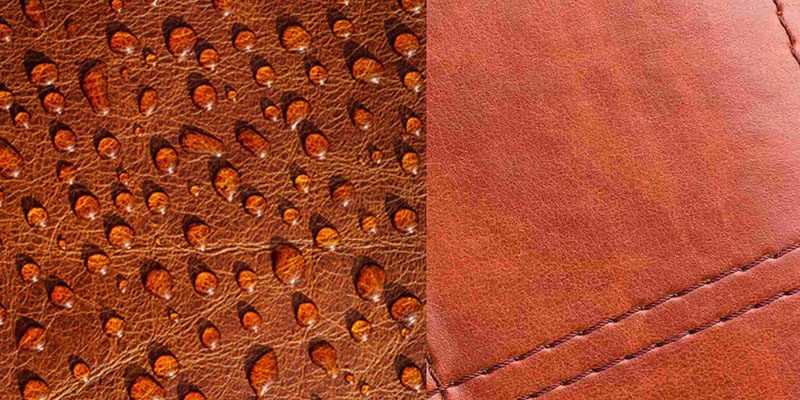
Leather’s rich history is only as remarkable as its continued popularity today. Inarguably one of the most durable and luxurious materials, its presence spans multiple industries and purposes. Moreover, its properties of toughness, flexibility, timeless look, and long lifespan make the ideal candidate for numerous roles. However, people today still worry about the question: ‘Does waterproofing ruin leather?’
Their concern is not without merit. Leather’s vulnerability to water is a well-known fact. However, adding chemicals or coatings to make it water-resistant comes with a trade-off. It might affect its texture, breathability, and durability. Having said that, the truth is a little more nuanced than that. Hence, there is no straight answer to the ‘Does waterproofing ruin leather?’ question
The Significance
The answer to ‘Does waterproofing ruin leather?’ is only true when done incorrectly. Alternatively, proper waterproofing can help extend the lifespan of leather. This holds particularly true for items regularly exposed to moisture. These include gloves, boots, and outdoor gear.
On the contrary, an incorrect method or using the wrong product may worsen the situation. They can lead to stiffness, discoloration, cracking, and long-term degradation. That’s why knowing about ‘Does waterproofing ruin leather?’ is incredibly important.
A Basic Understanding Of Water’s Devastating Effect On Leather
Before we can answer ‘Does waterproofing ruin leather?’, we need to know about the material first. Leather’s a natural material extracted from the hides of animals. Moreover, it is inherently porous. Hence, these pores help leather breathe, flex, and mold to your hand or body over time. However, they also make it vulnerable to external elements.
When exposed to moisture:
- Leather absorbs water through its pores
- Water breaks down the natural oils and lubricants
- The surface becomes stiff once it dries
- Repeated wetting and drying eventually lead to cracks
To counter that, people use waterproofing chemicals. But they run the risk of blocking these pores and ruining the leather’s natural characteristics. That’s why incredible care needs to be exercised when dealing with them.
What Does A Waterproof Leather Actually Look Like
The purpose of a waterproof product is the following:
- Repels water
- Slows down absorption
- Keeps leather soft and supple
- Prevents structural damage
The most essential element to the ‘Does waterproofing ruin leather?’ answer is balance. Good formulas like silicone sprays, mink oil, or beeswax conditioners penetrate the leather surface lightly. Hence, it creates water resistance without harming flexibility. In essence, high-quality products do not seal the leather. Instead, they stabilize it
Does Waterproofing Ruin Leather?
The short answer is no. Specifically, not when it is applied properly and using leather-safe products. On the contrary, waterproofing does the following:
- Extends leather life
- Prevents cracking
- Keeps the material soft
- Protects color and finish
Having said all that, it is not without possible problems. When the waterproofing is misused, overapplied, or when the product is not designed for leather, the leather’s quality diminishes.
That’s why knowing all the details of ‘Does waterproofing ruin leather?’ is incredibly necessary for its owners.
Why Some Methods Can Cause Damage
The damaging effect of waterproofing can only occur when the following happens:</span
- The product contains harsh chemicals
- Waxes or oils clog the pores
- Excessive waterproofing is applied repeatedly
- The leather is not cleaned before waterproofing
- Waterproofing is used on suede or delicate finishes
- The leather isn’t conditioned afterward
For instance, heavy wax-based waterproofing’s likely to lead to a thick, hydrophobic layer. This may end up causing:
- Reduced breathability
- Change the leather’s color
- Make the texture sticky or overly stiff
- Trap dirt on the surface
Hence, the best practice to follow is a dual one. Here, waterproofing is combined with conditioning to extend the lifespan of the product optimally.
Types of Different Leather
The difficulty in answering ‘Does waterproofing ruin leather?’ is due to the various types available in the market. Additionally, each version has a unique response to the waterproofing process.</span
- Full Grain Leather: Inarguably the strongest and most durable of all types, it responds well to the process. It is able to absorb oils and waxes without much resistance.
- Top Grain Leather: This is a smoother and more processed material. Hence, it is able to absorb the process relatively quickly. However, it requires conditioning afterward.
- Suede or Nubuck: It is generally recommended to never waterproof them with oils or waxes. Instead, use suede-safe sprays exclusively.
- Glove Leather (Goatskin or Cowhide): These materials are arguably the softest and flexible among all the other types. That’s why light waterproofing works incredibly well on it. However, caution needs to be exercised so as not to overapply it.
Conclusion
At the end of the day, there is no questioning leather’s appeal regardless of the product it’s used in. However, due to its natural composition, it is open to damage from external elements. That’s why its owner needs to exercise caution when handling it. The best cure remains caution. The answer to ‘Does waterproofing ruin leather?’ isn’t important if you completely avoid any interactions between water and your product.
On the other hand, when there is no escaping moisture, then waterproof it thoroughly. Check online and consult trained personnel to make sure that it is done correctly. An incorrect attempt to waterproof a product may end up doing more harm than good.
FAQs
A: Generally, it is recommended to avoid soaking or machine washing leather gloves. However, technically, it is possible to wash them, but there is a process to follow. Only opt for gentle spot cleaning with these products. Firstly, use a damp cloth or mild leather cleaner. Then, let the gloves air-dry naturally to prevent shrinking and cracking.
A: Although leather is naturally resistant to water, it is not technically waterproof. Instead, if left untreated, it will absorb water quickly. Hence, applying the right waterproofing product helps leather repel water without harming its flexibility
A: There are a lot of things that can happen if it gets wet. When soaked in water, it loses natural oils, becomes stiff as it dries, and may crack over time. Thus, it is essential to dry leather gloves at room temperature and condition them regularly to prevent that from happening.
A: Though there are various methods that people follow, there is one that’s considered the best. Apply a leather-safe waterproofing spray or wax. Additionally, conditioning the leather regularly and drying the gloves properly after exposure to moisture.
A: Yes, some brands market some of their products as waterproof. They manufacture them using treated leather and sealed seams. However, for standard pairs, manual waterproofing is required. Hence, enabling them to resist water.
