


An Intro Into The ‘Is Goatskin Or Cowhide Better’ Debate
Whenever the discussion around leather’s industrial application arises, one question is always asked: ‘Is goatskin or cowhide better?’ Whether you are a professional, hobbyist, or just an outdoor enthusiast, this is something that you have likely wondered about. The reason behind its continued intrigue is due to the balanced nature of the discussion.
Both of them are strong, dependable, and widely used in industries. They range from construction to welding to general maintenance. However, either one offers a unique set of advantages which makes it suitable for specific types of work.
The Importance Of The Learning About Different Types of Leather
Furthermore, their excellence leads to more confusion. Due to both types being equally effective, there seems to be no straight answer to the ‘Is goatskin or cowhide better?’ question. The reason why this question is important is due to the widespread presence around us.
Whether it is working gloves, protective apparel, footwear, or custom gear, they are always present. Hence, knowing about the details of each type helps you understand the nature of the product you adorn. Thus, not only equipping you to answer the ‘Is goatskin or cowhide better?’, but help you make informed product decisions.
Is Goatskin Or Cowhide Better: A Comparison
Before we begin to answer ‘Is goatskin or cowhide better?’, let’s first look at the reason for their popularity. This will help us understand both of them are dear to numerous industries in the world today.
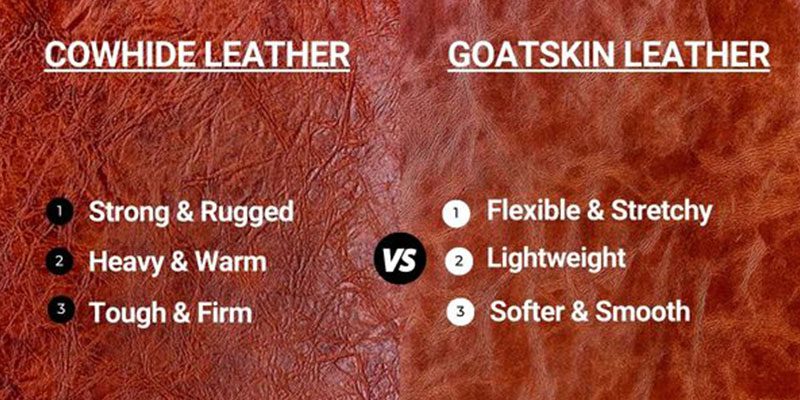
Cowhide: It is inarguably the most commonly used type of leather in the world right now. Moreover, it enjoys a reputation of being thicker, tough, and naturally abrasion resistant. As a consequence of being abundantly available, its price tends to remain on the reasonable side of the equation. Additionally, it is often found in work gloves, safety gear, jackets, tool pouches, saddles, and more.
Goatskin: Alternatively, goatskins’s renown stems from its unique combination of softness, flexibility, and strength. Furthermore, it possesses natural lanolin. Hence, making it extremely supple without compromising its durability. Also, for tasks demanding dexterity, comfort, and light to medium protection, it often comes out as the preferred choice.
Is Goatskin Or Cowhide Better: Physical Characteristics
In order to provide an informed answer to the ‘Is goatskin or cowhide better’ question, understanding the basics is important. Each type boasts an array of benefits. Moreover, they are derived from their thickness, natural oils, and fiber structure.
1 Durability and Strength
The cowhide’s strength makes it the perfect fit for heavy-duty work, welding, metal handling, and rugged outdoor activities.
Features:
- Higher resistance to abrasion
- Good heat protection
- Thick structure that withstands harsh environments
Alternatively, its counterpart offers a different set of advantages. Though thinner, it provides a strong structure due to its tight pebble grain texture. Thus, it is commonly found in automotive work, electrical tasks, warehouse jobs, and other activities requiring fine movement.
Features:
- Highly tear-resistant
- Naturally flexible
- Able to withstand repeated stress
2. Comfort and Flexibility
Goatskin’s natural lanolin results in a soft, smooth feel. That’s why it is often integrated into leather working gloves. Thus, providing long term comfort to its wearer.
Features:
- Breaks in quickly
- Molds to the hand
- Stays flexible even after repeated use
On the other hand, cowhide’s thicker and stiffer presence makes it more comfortable. Although it requires more break in time and may initially feel bulky, it rewards that patience.
3. Weight and Dexterity
Arguably the most important factor when choosing gloves is the thickness of the leather. In that regard, goatskin’s lighter weight makes it particularly desirable for detailed work.
Goatskin: Lightweight, excellent dexterity, ideal for handling small tools, wiring, and repetitive movements
Cowhide: Heavier, better for impact or abrasion protection but reduces fine motor control
4. Weather and Moisture Resistance
Due to goatskin’s naturally tight fiber structure and lanolin content, it is able to resist moisture better. Furthermore, it remains flexible even after being exposed to water, cold, or sweat.
Meanwhile, its counterpart possesses the ability to absorb more moisture. However, it runs the risk of becoming stiff when wet or dried improperly.
5. Heat and Abrasion Resistance
In this regard, cowhide’s properties are significantly more appealing. Often, welders and fabricators use gloves from this leather for work. It offers a range of features including the following:
- Superior heat resistance
- Better protection from sparks, abrasions, cuts, and rugged surfaces
Although goatskin’s heat resistance is commendable, it is not recommended for high temperature tasks. Not only will it expose its wearer to danger but the handwear itself will be permanently damaged.
Longevity and Maintenance
Leather’s known for the continued utility it provides to its owner without weakening if maintained properly. Though both types possess significant longevity, goatskin’s ability to resist cracks and stiffness makes it the more appealing option.
Goatskin
- Maintains softness over time
- Resists water damage
- Keeps its shape
Cowhide
- Lasts long under tough conditions
- Needs more conditioning to avoid drying
- Stiffens faster if exposed to water
Although this gives the former an edge in the ‘Is goatskin or cowhide better’ debate, it is nothing conclusive. Only after viewing it thoroughly can a satisfying decision be reached.
Conclusion
At the end of the day, there is no right answer to the ‘Is goatskin or cowhide better’ question. Both types enjoy a specific set of qualities that make it appropriate for certain tasks. However, that does not mean that such discussions are useless.
On the contrary, they help keep the public informed of the properties and advantages of each type. Hence, helping the people take more informed decisions regarding which type to select for particular jobs.
FAQs
A: These gloves are designed for durability, protection, and flexibility with certain industries in mind. These include construction, automotive work, welding, and industrial environments. However, unlike synthetic gloves, they provide resistance against heat, abrasion, and tears while offering better longevity.
A: The short answer is yes. They provide excellent dexterity, comfort, and tear resistance. Moreover, they are ideal for various people. These include mechanics, drivers, warehouse workers, and anyone who needs long lasting comfort without sacrificing protection.
A: Although there is some debate surrounding it, it is usually best for jobs requiring heavy duty protection. These include welding, metal fabrication, ranching, and construction. Additionally, its thickness offers superior heat and abrasion resistance.
A: This is a difficult question to answer. Normally, the best choice depends on the task that needs completion. So, for jobs requiring flexibility and comfort, goatskin’s likely to be rated highly. Meanwhile, a cowhide’s selection will be likely for heavy duty tasks.
Moreover, other options like pigskin and deerskin possess their own benefits. However, the former two are the most common types present in industries. The reasons behind it is their reliability and cost efficiency.
