


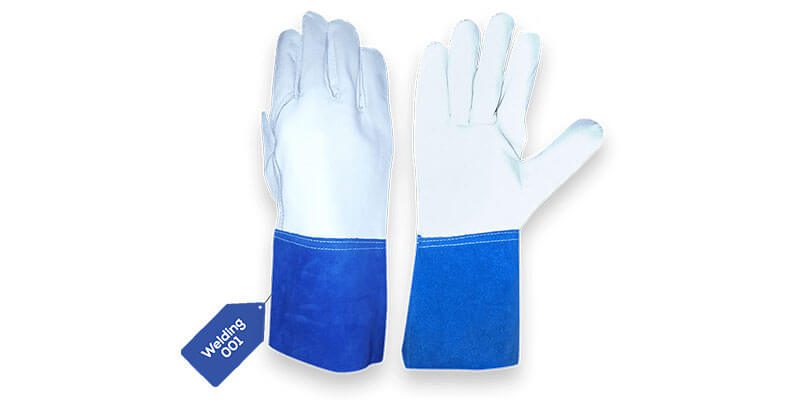
The Rise Of TIG Welding Gloves
The process of welding is one that requires the most balanced combination of safety and control. Here, the work is not only exposed to an incredible amount of hazardous elements, but they have to always remain in control of the task as well. Hence, staying calm under enormous amounts of pressure. That’s why the TIG (Tungsten Inert Gas) welding gloves stand out as the right pair for this job.
Furthermore, it offers accuracy, steady hands, and fine motor control. Additionally, the TIG welding gloves are uniquely designed to provide a delicate balance of dexterity and safety. Thereby, making it an unofficial standard pair that others simply can not achieve. Thus, industries around the world equip their workers with this piece of handwear to protect both their employees and their profits.
Understanding TIG Welding and Hand Protection Needs
Before we can explain why it’s a popular choice for workers and employers, we first need to establish the basics. In short, TIG welding uses a non consumable tungsten electrode and an inert shielding gas – usually argon. Moreover, this helps to create clean, precise welds. Furthermore, this process is widely followed in industries around the world, including the following:
- Aerospace
- Automotive manufacturing
- Stainless steel fabrication
- Aluminum welding
- Precision metalwork
Lastly, TIG welding gloves play a critical role by protecting the hands from heat, sparks and UV radiation. Meanwhile, they maintain a high level of finger sensitivity to deal with the thin metals and intricate welds.
What Is the Purpose of Welding Gloves?
Before we dive into what TIG welding gloves offer, let’s first look at the purpose of these pairs in general. These industrial handwears are designed to deliver the following:
- Protect hands from extreme heat and sparks
- Shield skin from molten metal and slag
- Prevent burns, cuts, and abrasions
- Reduce exposure to UV and infrared radiation
- Improve grip and tool control
All handwears designed to weld possess these core purposes in their structure. Having said that, there are certain elements that vary with design and the associated method.
What Makes TIG Welding Gloves Different?
The normal question to ask after all that is, ‘What is so different about TIG welding gloves?’ To put it simply, they produce fewer sparks and less spatter compared to stick or MIG pairs. Moreover, they offer greater precision and dexterity as well. Hence, they typically possess the following features:
- Thinner than other welding gloves
- More flexible and form fitting
- Designed for superior finger dexterity
- Optimized for heat control rather than heavy spatter protection
Materials Used in TIG Welding Gloves
These pairs are only as good as the material used in their construction. Depending on the material used in their manufacturing, their features are likely to vary. Let’s look at some of the main components of these pairs.
1. Goatskin Leather: Arguably the most popular element of TIG welding gloves, it enables workers to have more feel without compromising on safety. Moreover, it offers the following benefits:
- Soft texture
- Excellent dexterity
- Natural heat resistance
- Durability despite thinness
2. Deerskin Leather: Often used in premium level products, it’s best known for providing the following advantages.
- Exceptional flexibility
- Comfort during long welding sessions
- Resistance to stiffness after repeated heating
3. Cowhide Leather: Although it is thicker and less flexible, that does not mean it does not offer value. On the contrary, it is often used to reinforce areas for added durability. Hence, extending the lifespan of industrial hardware considerably.
4. Kevlar Stitching: This component is reserved for the highest quality of TIG welding gloves. It offers an array of benefits that include:
- Resists burning and melting
- Adds strength to seams
- Increases glove lifespan
Safety Features of TIG Welding Gloves
Even though TIG welding produces significantly less spatter, that does not mean safety is negotiable. Instead, it still remains the highest priority, as proven by the offering of the following features:
- Heat Resistance: These industrial handwears are designed to withstand radiant heat. These are often present in the weld pool or during torching. The pair remains flexible whilst providing thorough cover from all these hazards.
- Electrical Insulation: Arguably, the most dangerous in industrial plants is the threat of electrocution. That’s why the leather in this glove acts as a natural insulator. Thereby, protecting welders from minor electrical shocks.
- Cuff Length: The unique distinction between this pair and the MIG one is that the former sports a noticeably shorter cuff. Hence, allowing the wearer optimum wrist mobility. At the same time, they are assured of the safety of their forearms as well.
- Flame Resistance: The riskiest part of dealing with heat is during the ignition process. These handwears provide proper resistance to these flames. Moreover, they do not melt when exposed to sparks or heat for a prolonged period of time
Performance: Dexterity vs Protection
Arguably, the most unique aspect of TIG welding gloves is their perfect balance in performance. They’re able to combine dexterity and performance in a way that workers feel free and protected at the same time.
1. Dexterity:
- Thin leather improves finger movement
- Pre-curved fingers reduce hand fatigue
- Close fit enhances control of filler rods
2. Grip:
- Natural leather texture improves grip
- Allows precise torch manipulation
- Reduces hand strain during long welds
3. Comfort:
- Breathable leather minimizes sweat buildup
- Soft interiors prevent chafing
The unique problem that TIG welders face is that too much protection can be just as problematic as too little.
What Gloves Are Best for TIG Welding?
All these details boil down to one simple question: ‘Which is the best pair for TIG welding?’ Well, there is no right answer to this. However, there is a guideline that will help pick the best option. The right pair typically offers the following features:
- Goatskin or deerskin leather construction
- Kevlar stitching
- Slim, ergonomic fit
- High dexterity
- Moderate heat resistance
Having said that, TIG welding gloves are always preferable to the alternative general-purpose pairs. This holds particularly true when performing TIG based work.
Conclusion
All in all, the popularity of TIG welding gloves is not without reason. After years of advancement, they have stood out as the most balanced industrial pair in the market today. Not only do they provide sufficient protection, but they do so without compromising the worker’s efficiency. Hence, making it a preferred choice for workers and employers alike. Thus, it has become a staple in industries around the world.
FAQs
Gloves made from goatskin or deerskin with Kevlar stitching are best for TIG welding. That is due to their high dexterity and adequate heat resistance.
Welding gloves protect hands from heat, sparks, molten metal, cuts, and UV radiation. Additionally, they improve grip and safety.
Welders use different gloves depending on the process. This holds true for TIG welding gloves as well as for precision work and heavier gloves for MIG or stick welding.
TIG welding gloves are thinner and more flexible for precision. Additionally, MIG welding gloves are thicker for greater heat and spatter protection.
