


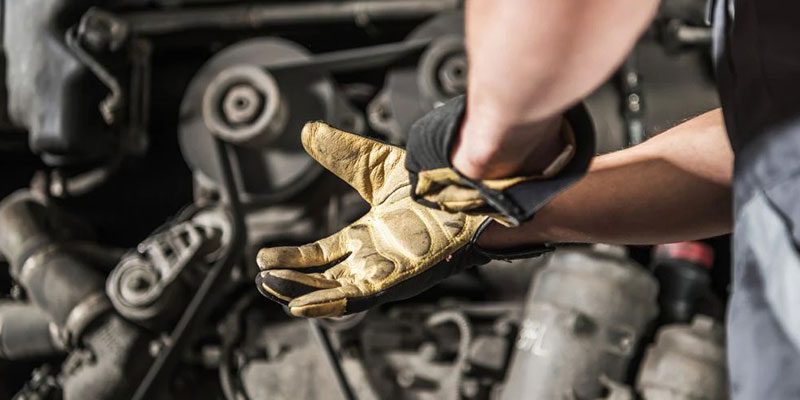
The Hands’ Sanctuary
Regardless of profession, location, gender, or age, we all interact with gloves in one or another. Having said that, whether you are a professional technician or a DIY enthusiast, one question always arises: What gloves are best for mechanics? Over the past couple of decades, there have been various variations that have entered the market.
However, the dangers in the workplace have also increased substantially. They include chemicals, sharp edges, oils, and high-heat tools found in automotive environments. That’s why knowing about what gloves are best for mechanics is more important now than ever before. It may be the only difference between safety and a permanent injury.
The Right Decision
Furthermore, there are various designs and materials that are used in glove production today. These range from nitrile pairs to reinforced synthetic leather hand protection. Each iteration is produced with a particular purpose in mind.
On the other hand, a poor decision regarding suitability may lead to poor outcomes. These include accidents, skin irritation, or reduced tool control. That’s why information about what gloves are best for mechanics should be accessible to all
What Gloves Are Best For Mechanics: Why Is It Necessary
A long time ago, people used to work bare handed in factories with only a rag nearby. Soon, people realized the dangers they were exposed to and demanded protection. Today’s automotive industry requires even more dangerous tasks than before. That’s why they require even more compact and resolute security. Hence, knowing about what gloves are best for mechanics then becomes a necessity rather than a choice.Their works involves the following
- Solvents and chemicals
- Hot engine components
- Sharp metal edges
- Heavy impact tools
- Prolonged repetitive motions
Without the proper equipment, the workers are exposed to possibly fatal danger. That’s why professionals above all should know what gloves are best for mechanics. When clothed in the best pairs, it provides the wearer with the following.
- Protection without sacrificing dexterity
- Grip control when handling oily or small parts
- Breathable materials to reduce sweating
- Durability under constant use
What Gloves Are Best For Mechanics: The Types
The unique aspect of the glove market is the sheer diversity at display. There is no one glove that fits all products available in the market. That’s why knowing about what gloves are best for mechanics helps match the right glove for the job
Below are the most commonly used gloves for mechanics and what makes each one useful. Once we are aware of each type, then we can decide on what gloves are best for mechanics
1 Nitrile Glove: This type of handwear remains the first choice in the automotive industry. It offers excellent resistance to oil, gasoline, brake fluid, and harsh solvents. Moreover, they are more sturdy and puncture resistant than its latex counterpart.
Advantages:
- High resistance to chemicals
- Powder free options reduce skin irritation
- Good fit and dexterity
- Suitable for tasks requiring cleanliness (electrical components, interior work)
Best Use Cases:
- Oil changes
- Handling chemicals or fluids
- Diagnosing leaks
- Working with fuel systems
2 Latex Gloves: Arguably the most commonly seen type, it is used in multiple fields. These include hospitals, restaurants, factories, etc. Additionally, they provide excellent fit, stretchability, and tactile feedback. Hence, it makes it the perfect choice for precision work. Yet, their lack of durability and weakness against chemicals make it unsuitable for certain tasks. Lastly, it is recommended to check for allergies before wearing them as they cause skin complications for some people.
Advantages:
- Best tactile sensitivity
- Highly flexible
- Comfortable for prolonged wear
Best Use Cases:
- Low risk indoor tasks
- Electrical diagnostics
- Light assembly
3 Vinyl Gloves: Arguably the most inexpensive pairs, they work well for quick, light tasks. However, they too lack the durability required for heavy automotive work that mechanics are supposed to perform.
Advantages:
- Affordable
- Latex free
- Suitable for quick, light tasks
Best Use Cases:
- Dirty non technical tasks
- Cleaning surfaces
- Short term usage
4 Synthetic Leather Mechanic Gloves: For tasks that take the most toll on the worker, there is no better option than this one. When protection, grip, and abrasion resistance, these pairs become a no-brainer. Additionally, they are made from synthetic leather, neoprene, or rubber reinforcements that enhance both performance and protection.
These gloves often include features like:
- Knuckle protection
- Padded palms
- Reinforced fingertips
- Breathable mesh panels
They are ideal for:
- Suspension work
- Using impact tools
- Handling sharp or heavy parts
- Tire changes
- Under the car tasks
5 Cut Resistant Gloves: Made with Kevlar, UHMWPE, or steel fiber blends, they reduce the risk of lacerations significantly. Hence, making them appropriate to take on the following tasks:
- Cut metal
- Sheet metal components
- Rusted metal parts
- Sharp engine edges
Best used for:
- Bodywork
- Cutting tools
- Handling metal edges
- Exhaust system work
Conclusion
All in all, there is no one answer to the ‘What gloves are best for mechanics?’ question. With the nature of work changing constantly, the threats the workers are exposed are also transforming. That’s why they too require ever evolving protection. Different gloves in the market today perform various tasks. However, each of them aims to provide thorough protection to the wearer against all forms of threats. Thereby, helping them perform their job efficiently and safely.
FAQs
A: There are pros and cons of each pair that makes them suitable for particular jobs. For the former, it provides stronger chemical resistance, better puncture protection, and durability. Moreover, it makes it easy to handle oil, fuel, brake fluid, and various solvents. On the other hand, the alternative provides enhanced flexibility and tactile sensitivity but breaks down easily when exposed to automotive chemicals. Additionally, they run the risk of causing allergic reactions. Hence, for most automotive tasks, the former remains the recommended choice.
A: There is no one particular solution to opting for the right pairs. Often, it is the type of work that requires attention that informs what the right decision is. For instance, nitrile pairs are utilized when dealing with chemicals and fluids. Meanwhile, synthetic leather mechanic sets are preferred for heavy duty mechanical jobs. A few things to consider when weighing your options are durability, comfort, grip, and the environment. These factors determine the ‘rightness’ of a glove.
A: Often, people prefer synthetic leather gloves with reinforced palms for everyday, general work. Not only are they equipped with breathable panels but offer a good grip as well. Furthermore, they provide protection from various dangers. These include cuts, abrasions, and impacts while still offering reasonable flexibility. Alternatively, disposable nitriles are the right choice when working with fluids.
A: The short answer is yes. Nitrile gloves are the best equipped to deal with chemicals. Often 6 to 9 mm thick, they resist gasoline, oil, brake fluid, transmission fluid, degreasers, and most solvents. Moreover, they prevent skin irritation and chemical burns during fluid heavy automotive work.
A: Normally, the best pairs combine protection, durability, dexterity, and comfort into a single piece. Different pairs are best suited for various jobs. That’s why a mechanic often rotates between glove types based on the job. Hence, making sure that he has the best resources to perform each task.
